From tagine to bastilla, ras el hanout to mint tea — Moroccan cooking is two thousand years of cultural exchange served on a single plate. Here's how to taste the history.
To eat in Morocco is to taste two thousand years of history in a single bite. Long before "fusion" became a culinary buzzword, Moroccan cooks were quietly perfecting it — folding together Amazigh (Berber) foundations, Arab spice knowledge, Andalusian refinement, Jewish preservation techniques, and later French pastry, into one of the most layered cuisines on earth.
What makes it extraordinary isn't any single dish. It's a philosophy: the patient balance of sweet against savoury, the generosity of the communal plate, and the conviction that a meal is never just food — it's an act of hospitality.
The clay pot that changed everything
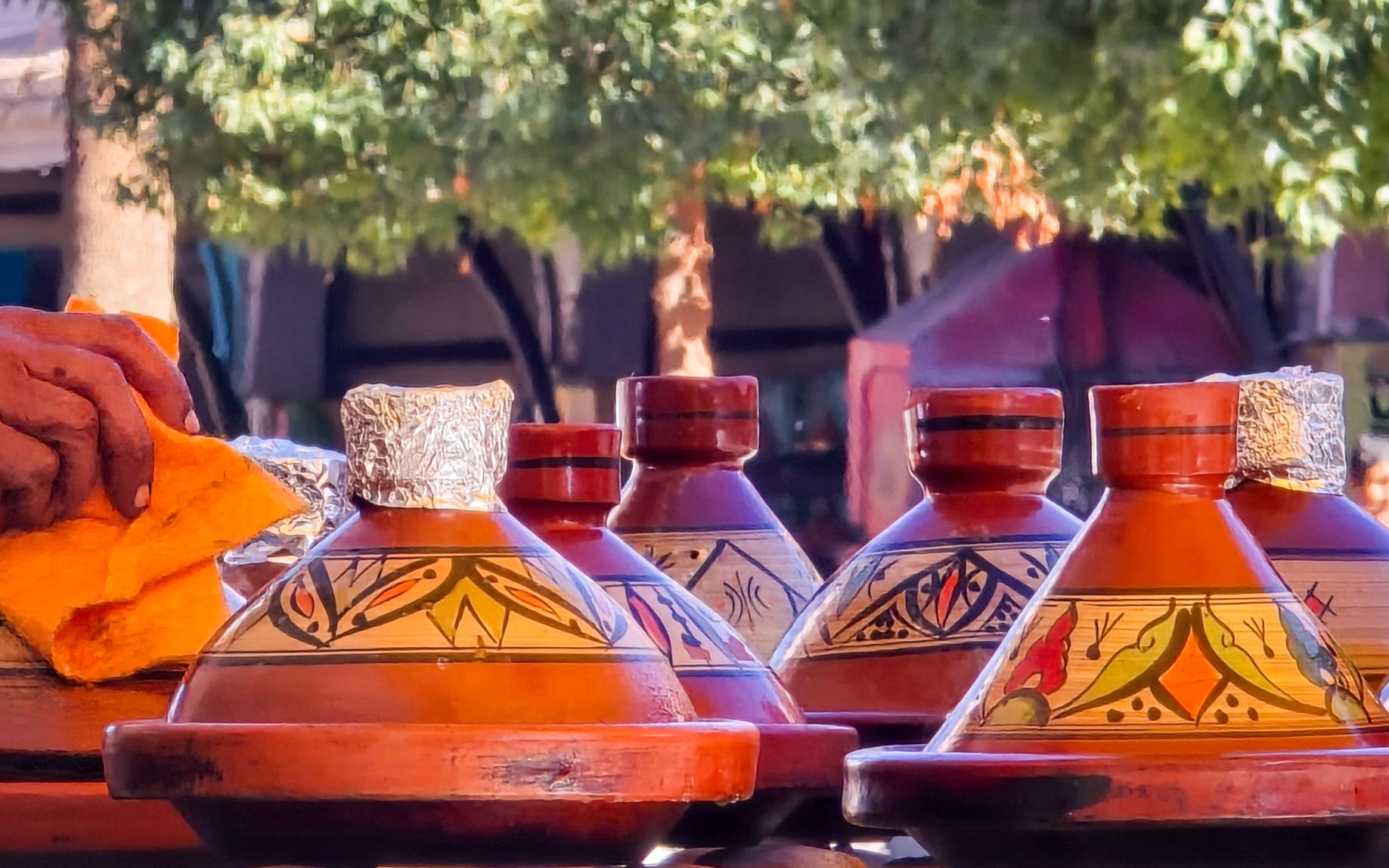
The tagine — both the conical earthenware pot and the dish cooked inside it — is the heart of Moroccan home cooking. Its genius is in the shape: that tall, cone-shaped lid catches the steam rising from the slow-simmering stew, condenses it, and lets it fall back into the pot. The result is meat so tender it slips from the bone, vegetables infused with spice, and a sauce that has been quietly self-basting for hours.
The classic combinations have endured for generations because they simply work: lamb with prunes and almonds, the sweetness playing against the rich meat; or chicken with preserved lemon and olives, tangy and golden with saffron and turmeric. That preserved lemon — whole lemons salted and pickled in their own juice for a month or more — is a distinctly Moroccan touch that turns up the brightness of everything it touches.
Ras el hanout: the soul of the spice shop
If one thing defines the Moroccan kitchen, it is ras el hanout — literally "head of the shop," the name signalling the very best a spice merchant has to offer. It isn't a fixed recipe but a signature: every herbalist blends their own, sometimes combining twelve spices, sometimes thirty or more. Cumin, coriander, cinnamon, ginger, cardamom, clove and saffron form the backbone, often lifted with floral notes of dried rose petal or lavender.
The art, as any Moroccan cook will tell you, is not intensity but balance — no single spice should shout over the others. The most prized blends are still ground by hand in the historic herbalist stalls of Marrakech's Rahba Kedima, recipes passed from master to apprentice across generations.
"Each dish has its own story, and the spices are the medium through which that story is told."
Beyond tagine and couscous
Couscous — hand-rolled semolina steamed again and again until impossibly light — is the national dish, traditionally served on Fridays after midday prayer, often topped with caramelised onions, raisins and cinnamon in the version called tfaya. But limit yourself to tagine and couscous and you'll miss the country's most surprising flavours:
- Bastilla (pastilla) — a showstopping pie of spiced poultry wrapped in paper-thin warqa pastry, dusted with powdered sugar and cinnamon. Sweet and savoury at once, it carries the DNA of Andalusian cooking brought by Moors fleeing Spain in the 15th century.
- Harira — the rich tomato, lentil and chickpea soup that breaks the fast each evening during Ramadan, fragrant with ginger and fresh herbs.
- Rfissa — shredded msemen flatbread soaked in a lentil and fenugreek broth with spiced chicken, traditionally served to celebrate a new birth.
- Chermoula — the zesty marinade of coriander, cumin, paprika, garlic and preserved lemon that coats the grilled sardines of the Atlantic coast.
The ritual of mint tea
No meal — and no welcome — is complete without mint tea. Made with Chinese gunpowder green tea, fresh spearmint, and a generous hand of sugar, it's poured from height to crown each glass with foam, and traditionally served in three rounds. There's a Maghrebi saying that the three glasses are "gentle as life, strong as love, bitter as death" — a small ceremony of hospitality repeated millions of times a day across the country.
◆ Insider tip
The finest Moroccan food is rarely found in restaurants — it's cooked at home. On our journeys, a home-hosted dinner with a local family, or a hands-on tagine class in a private riad kitchen, is often the meal travellers remember above all others.
Why food is the truest souvenir
In Morocco, refusing food can gently offend the cook; hosts prepare far more than anyone could eat, simply to show generosity. To share from a communal plate is to be folded, however briefly, into a family. That's the real flavour of Moroccan cuisine — not just the saffron and the slow-cooked lamb, but the warmth of the table it's served on.